Best Dog Harnesses: 9 Top Picks for Walking, Hiking & Training
We tested 25+ harnesses with our puller Rocky and our sensitive Luna. Here are the ones that actually work.

Disclosure: This post contains affiliate links. If you purchase through these links, we may earn a small commission at no extra cost to you.
Finding a harness that fits both my dogs has been a journey. Rocky (70lb Lab) pulls like he’s training for the Iditarod. Luna (35lb rescue mix) has a deep chest and narrow shoulders - most harnesses rub her armpits raw.
I tested 25+ harnesses over two months. I walked, ran, hiked, and did training sessions in each one. Here’s what survived - and what didn’t.
Quick Picks
| Category | Product | Price |
|---|---|---|
| Best Overall | Ruffwear Front Range | $49.95 |
| Best Budget | Kong Comfort | $22.99 |
| Best No-Pull | Rabbitgoo No-Pull | $25.99 |
| Best for Hiking | Ruffwear Flagline | $59.95 |
How We Tested
Each harness was tested over 5+ walks totaling at least 10 miles. We evaluated:
- Fit: Does it stay in place? Any rubbing or chafing?
- Usability: Easy to put on/take off? Time under 30 seconds?
- Pulling control: Front vs back clip effectiveness
- Durability: After 2 weeks of daily use
- Comfort: Padding, breathability, range of motion
Detailed Reviews
1. Ruffwear Front Range Harness
Price: $49.95 | Check Price on Amazon →
Best for: Most dogs - the all-around winner
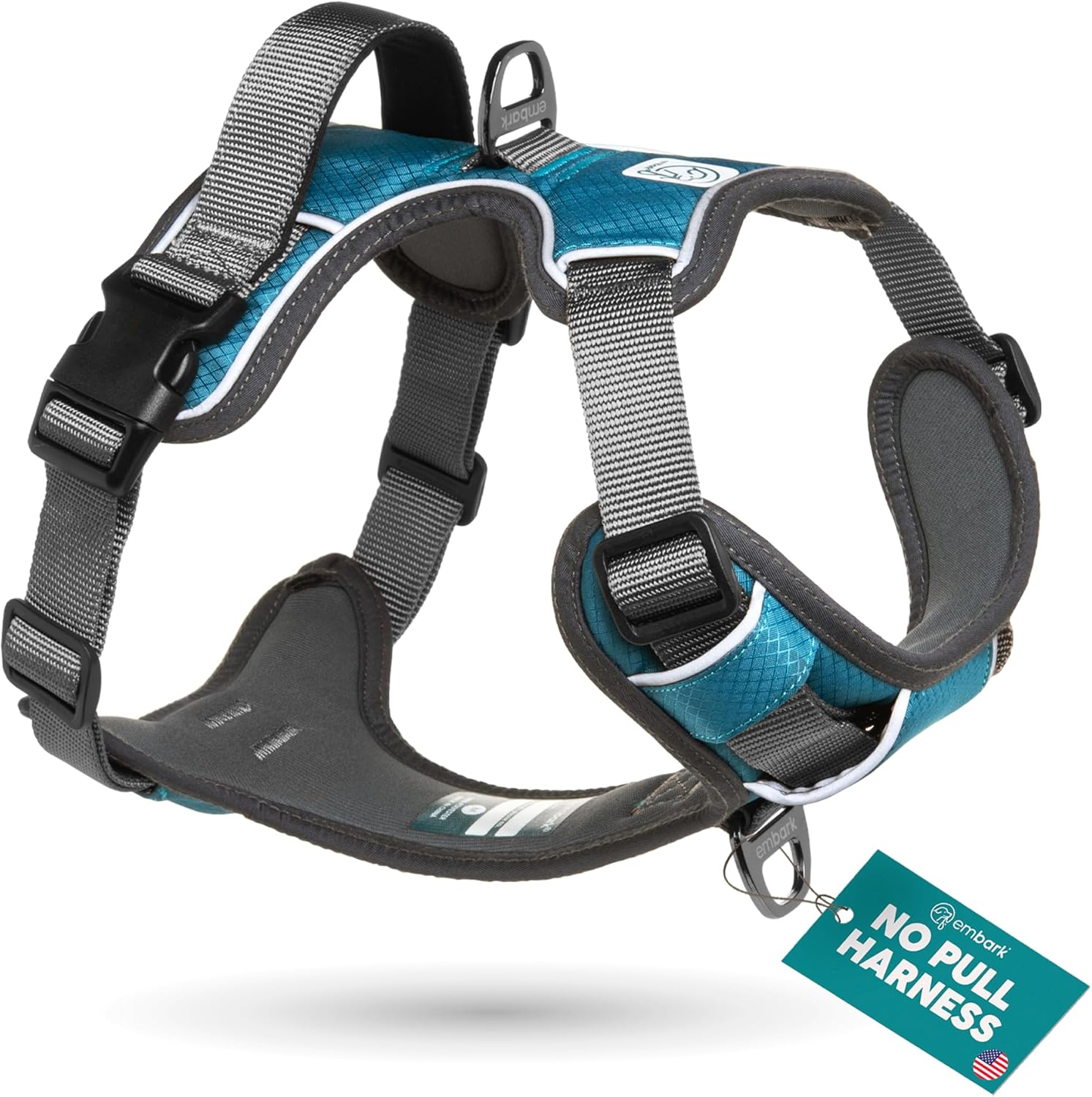
This is the harness I recommend to everyone who asks. Two leash attachment points (front for no-pull training, back for casual walks), four adjustment points for a custom fit, and reflective trim for visibility.
Luna has a deep chest that makes most harnesses slide sideways - this one stayed put. The padding is substantial enough for all-day hikes but not bulky. Both my dogs wore it comfortably for hours.
⚠️ Caveat: The handle isn’t sturdy enough for lifting a heavy dog. If you need a lifting handle (senior dogs, getting in/out of cars), look elsewhere.
Verdict: Worth every penny. Buy this unless you have a very specific need like extreme pulling or heavy lifting.
2. Kong Comfort Dog Harness
Price: $22.99 | Check Price on Amazon →
Best for: Budget-conscious owners with calm dogs
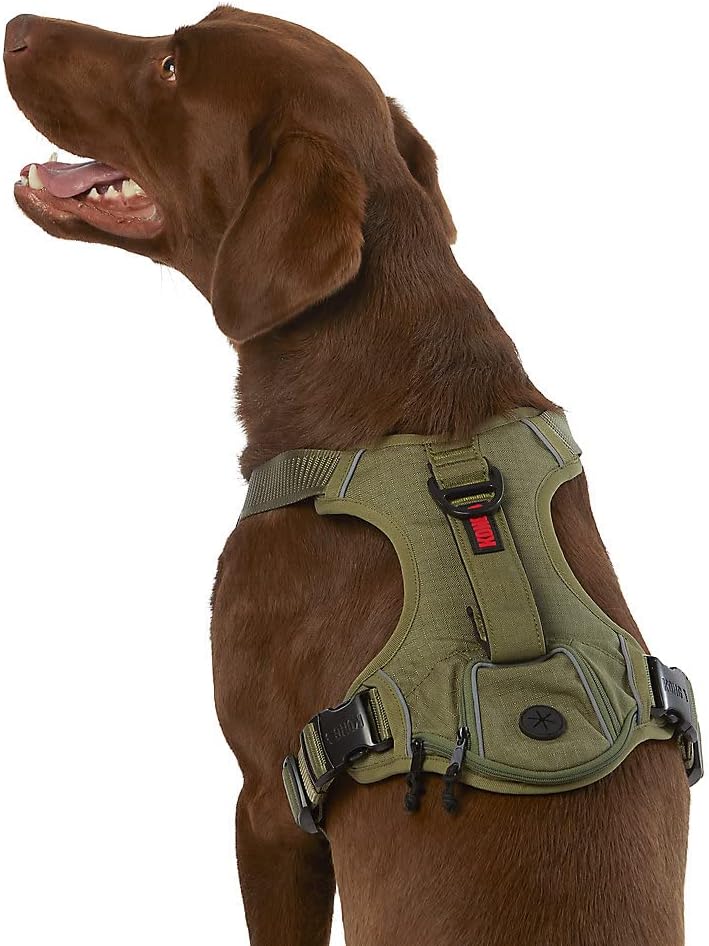
Kong’s harness is simple, durable, and shockingly affordable. It’s a step-in design (no pulling over the head), which makes it great for dogs who hate having things put over their heads. The padded chest plate distributes pressure evenly.
This is our ‘around the neighborhood’ harness. For casual walks, it’s perfect. For serious hiking or training, you’ll want something more substantial.
⚠️ Caveat: Only one leash attachment point (back clip). Not ideal for pullers. The sizing runs small - measure your dog carefully.
Verdict: The best budget harness I’ve found. Ideal for calm, well-trained dogs on neighborhood walks.
3. Rabbitgoo No-Pull Harness
Price: $25.99 | Check Price on Amazon →
Best for: Dogs who pull on walks
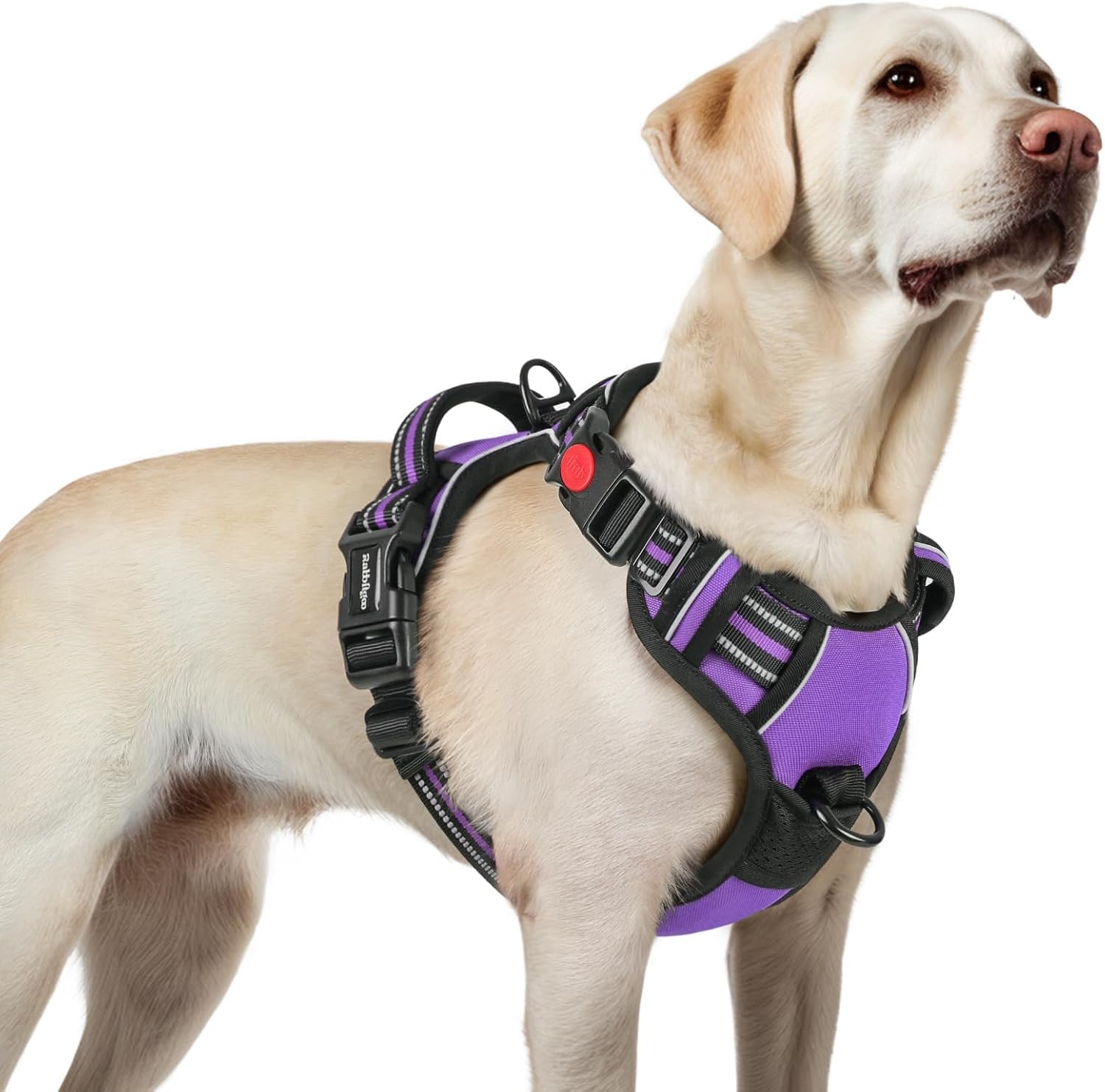
If Rocky had his way, he’d pull me down the street every walk. The Rabbitgoo’s front clip design gently turns his body sideways when he pulls - it’s not painful, just redirecting. Within a week, his pulling decreased noticeably.
The martingale-style loop around the chest tightens slightly when he pulls, which gives gentle feedback. No choking - just a subtle ‘hey, chill out’ signal.
⚠️ Caveat: The chest padding isn’t as plush as higher-end harnesses. After a 2-hour hike, Luna had some mild rubbing. Best for shorter walks.
Verdict: Game-changer for pullers at a fraction of the cost of training harnesses. Best $25 you’ll spend.
4. Ruffwear Flagline Harness
Price: $59.95 | Check Price on Amazon →
Best for: Serious hikers and trail runners
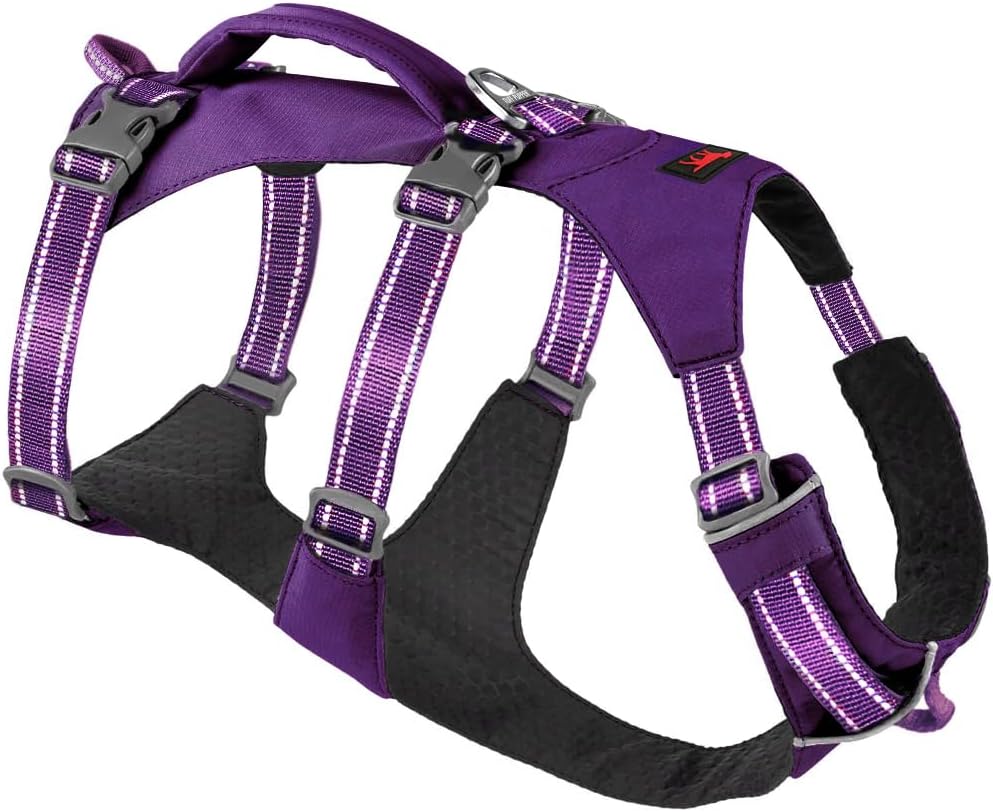
The Flagline is Ruffwear’s adventure harness - lighter than the Front Range, with a streamlined design that doesn’t restrict shoulder movement. It’s the harness I take on day hikes.
Both dogs wore it for 6+ hours on a mountain trail with zero chafing. The handle is sturdy (can actually lift a dog). The reflector is built into the fabric, not just sewn on.
⚠️ Caveat: No front clip option - back clip only. And at $60, it’s an investment. Save this for dogs who actually hike regularly.
Verdict: The best active-use harness on the market. Overkill for couch potatoes, essential for adventure dogs.
Other Products We Tested
- Blue-9 Balance Harness: Excellent fit customization but zero padding. Good for training, not comfort.
- Julius-K9 IDC Powerharness: Built like a tank. Great for working dogs but heavy for everyday walks.
- Petsafe 3-in-1 No-Pull: Decent for the price but velcro wore out within 3 months.
How to Choose a Dog Harness
- Measure your dog - Measure around the widest part of the chest (girth), not the neck.
- Front clip for pullers - A front attachment gently redirects pulling dogs.
- Back clip for casual walks - Simpler and more comfortable for dogs who don’t pull.
- Padding matters - Thin straps can rub on long walks. Look for padded chest plates.
- Reflective for safety - If you walk at dawn or dusk, reflective trim is non-negotiable.
FAQ
Is a harness better than a collar?
For most dogs, yes. Harnesses distribute pressure across the chest instead of the neck, reducing risk of tracheal injury. Dogs who pull are safer in a harness.
Should I leave the harness on all day?
No. Remove the harness when your dog is inside to prevent chafing and allow the coat to breathe.
How do I measure my dog for a harness?
Measure the widest part of the chest (behind the front legs). Add 1-2 inches for comfort. Most brands have a sizing chart - use it.
Final Verdict
Start with the Ruffwear Front Range - it works for 90% of dogs. If your dog pulls, add the Rabbitgoo No-Pull for training walks. And if you’re hitting the trails, the Ruffwear Flagline is worth every cent.
Disclaimer: This article contains affiliate links. As an Amazon Associate, we earn from qualifying purchases. This does not affect the price you pay or our editorial recommendations.
Always consult with your veterinarian before making significant changes to your pet’s diet or health routine.